Table Of Content
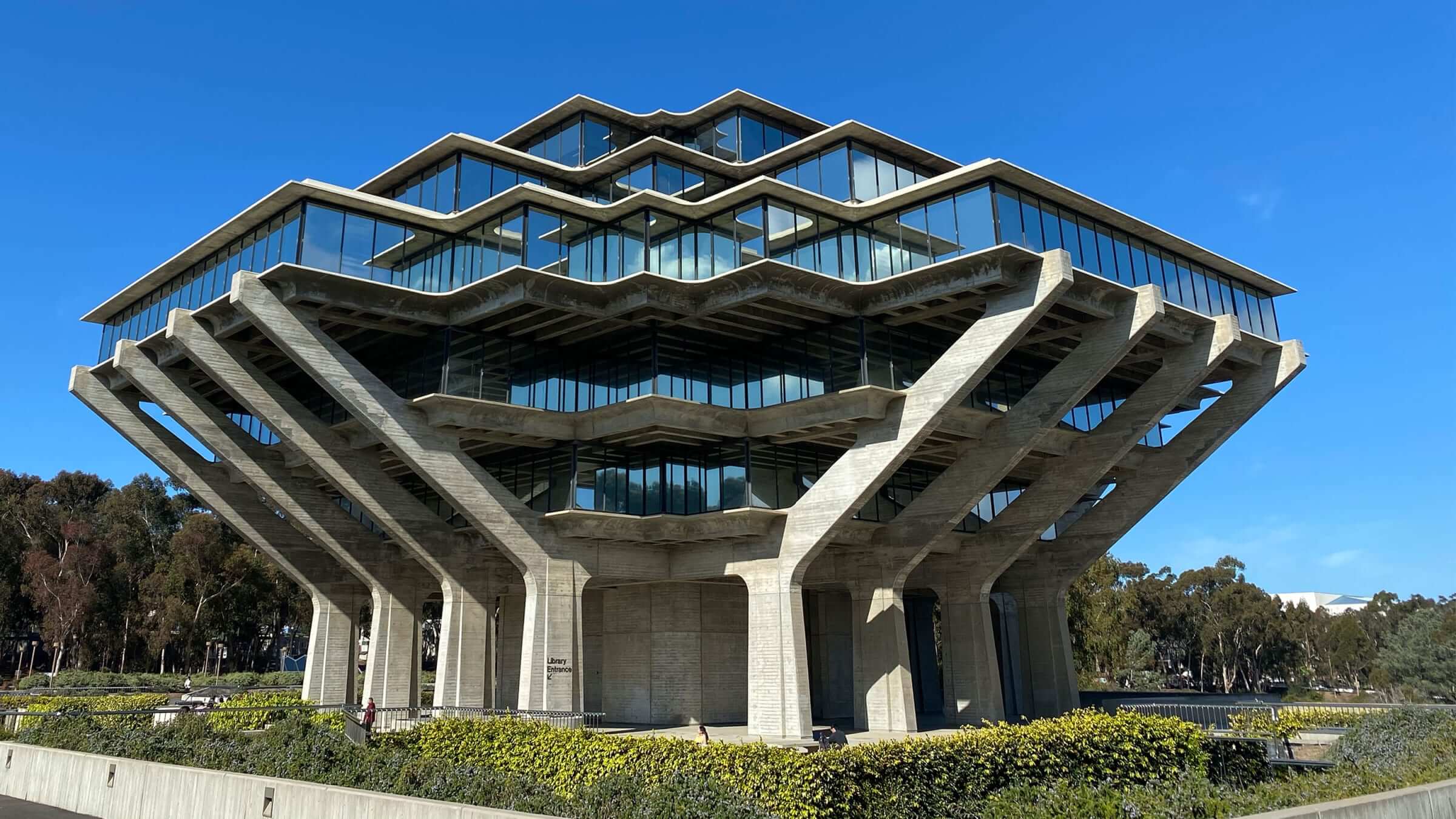
Brutalism, defined by a steadfast employment of angular shapes and raw materials such as concrete, can provide a simple yet unique backdrop for daily life. From interiors decorated with similarly rugged furnishings to those filled with contrasting curvy fixtures, we’ve gathered four stunning Brutalist homes featured by AD. In 1949 the Swedish scientist and pharmaceutical boss Elis Göth commissioned Bengt Edman and Lennart Holm to build him a private residence in Uppsala, Sweden.
Get the best in architecture and design
Viral Homes: Who Bought That Brutalist Bachelor Pad? - Curbed
Viral Homes: Who Bought That Brutalist Bachelor Pad?.
Posted: Thu, 15 Oct 2020 07:00:00 GMT [source]
James Bond author Ian Flemming famously hated Goldfinger’s aesthetic so much that he named Bond’s nemesis after him. Brutalism appears aesthetically crude and is what you'd expect from a stark government building, university library, parking garage, or high-rise housing. It's rough, looks unfinished and minimalistic, and lacks flourishes or classic beauty. Designed and built for the '67 Expo in Montreal as an experimental neighbourhood, the project explores the use of prefabrication technologies to create low-cost, functional yet intriguing spatial compositions.
Sacred Modernity showcases "unique beauty and architectural innovation" of brutalist churches
But if you’re thinking this apartment is a blatant homage to radical Italian design, think again. Cipelletti is a different kind of crazy, he insists, “my craziness is in compulsive obsession—it’s more severe; it’s about deleting things.” He likes to use the word millimetric to describe his work. Table surfaces are cut at 45-degree angles to give them a paper-thin appearance. And a linear motif, like the frets of a guitar, runs horizontally across the apartment from ceiling to walls, across the bookshelves and onto the floors with almost painful precision. Designed by architectural firm Kallmann Mckinnell & Knowles, the Boston City Hall was completed in 1968.
Materials and Tags
Lastly, as concrete-heavy forms fell out of favor, many brutalist buildings failed to attract investment and declined. Alison and Peter Smithson had met as students at Durham University, where they began a lifelong personal and professional relationship. In 1949 they won an architectural competition for their design for the Hunstanton Secondary Modern School ( ) in Norfolk, later seen as an exemplar of Brutalist style.

Breuer Building
In the decades following its zenith, Brutalism became redolent of urban deprivation and decline, largely because of its use in largescale social housing projects, but in the twenty-first century Brutalism is decidedly back in critical and popular fashion. Brutalist architecture emerged in the 1950s as an offshoot of the modernist movement. Post-war reconstruction needs were a major influence, as European cities required large-scale rebuilding after the destruction of World War II.
Brutalism was a reaction against the lightness and decoration of 1930s modernism. Brutalism was frequently used for government, institutional, and residential buildings as its large, modular forms could be inexpensively constructed with bare concrete. High-rise housing projects provided needed urban housing but were sometimes seen as oppressive. Led by architect Lutero Leme, from the Arquitécnika studio, in Brasília, the project aimed for the revitalization of a Brutalist residence, built in the federal capital in the 70s, originally designed by architect João Filgueiras (also known as Lelé). With 1,968m² of built up area on a 12,000 m² lot area, the intention was to keep the original exposed concrete and its volume, creating current technological solutions.
Brutalism fans needn’t worry though; there’s still plenty of exposed concrete to enjoy in a range of textures – a nod to the bunker home’s natural setting. Concrete is still the material of choice for architecture enthusiasts, as Brutalism’s revival continues apace. The style is as eclectic as it is popular, from sci-fi takes on the style to tropical concrete retreats designed to blend with nature. The mixed-use residential and commercial building is an expression of the Metabolist language, a cultural movement that represented the cultural rebirth of post-war Japan, and is an example of the concept of serial application of the housing capsule model. An iconic symbol of Milanese urbanitas, the Velasca Tower represents the will to rise again of a city devastated by war, looking to the future with a strong reference to the past. In this design, grey brickwork builds chunky columns under an extended canopy/first-floor terrace.
Designed by Moshe Safdie, an Israeli-Canadian architect, Habitat 67 epitomizes Brutalist design. Looking at the complex, you immediately notice the boxy appearance that creates a pop-out illusion on a vast, large scale. What's unique about Brutalist design is its expression through simple materials. Instead of focusing on lavish finishes, the Brutalist style keeps things minimalistic by letting the organic shapes shine through stripped-down materials. As the movement gained momentum from the 1950s to 1970s, some found the style to be austere and menacing because of the harsh plainness the design imposes. Nonetheless, iconic works of Brutalism such as the Barbican Estate in London were finished during this period.
London's best home renovations 2024
Because of their heavy poured concrete construction, Brutalist buildings are difficult to renovate (and tear down). However, one successful example is the Centre National de la Danse outside Paris, originally a 1972 administrative building; it transformed in 2003 into a public space and dance center. Brutalist buildings were neglected and covered in graffiti, symbolizing urban decay. The embrace of Brutalist architecture in the Soviet Union meant that the style also began to suffer from its association with totalitarianism.
Pratt and his wife Katherine Schwarzenegger drew attention online when news broke that the couple had begun work on a 15,000-square-foot home in place of the Zimmerman House by Ellwood, who designed buildings in Los Angeles from the early 1950s to the mid-1970s. In complete contrast, Samuel Ross’s Terminal 02 captured the imagination for its ginormous scale as well as turning the surrealist lens on the humble toilet. Working with bathroom brand Kohler, the cutting-edge London artist and designer constructed a maze-like brutalist installation at Palazzo del Senato featuring a giant orange lavatory and twisting industrial pipes to mark the launch of his first product, Formation 02. "Too recent to be described as post-war, this Polish church can rather be considered post-soviet. Church construction during the Russian occupation of Warsaw was almost entirely banned, influencing the flourishing of sacred architecture that followed independence. "Germany's post-war churches are often brutal and austere. Their designs reflect a rejection of the opulence and pride of the pre-war period and serve as a place of sanctuary and reflection. "These architectural styles emerged in the post-war period as a rejection of the past's orthodoxy and a pursuit of a new social order free from associations with opulence, authority and war."
The concept of "streets in the sky" was an architectural feature of Brutalism that became popular in the 1960s, involving the use of elevated walkways connecting raised apartment buildings to create a sense of neighborhood. An early example of their use was in the Smithsons' design for Golden Lane Estate (1952), an unbuilt project, which became the model for their Robin Hood Gardens in London ( ). The Smithsons, along with the architects Georges Candilis, Jaap Bakema, Giancarlo De Carlo, Aldo van Eyck, and Shadrach Woods, were core members of Team 10. This group formed in 1953 at the Congrès International d'Architecture Moderne, known as CIAM. As Alison Smithson wrote, "[b]elonging is a basic emotional need. Its associations are of the simplest order. From 'belonging' (identity) comes the enriching sense of neighborliness. The short narrow street of the slum succeeds where spacious redevelopment frequently fails."
Brutalism was a movement in modern architecture responsible for some of the most striking building designs of the twentieth century. But its achievements also proved shocking and controversial, partly because of its emphasis on the use of unfinished concrete for exterior surfaces. Brutalism emerged after the Second World War but was rooted in the ideas of functionalism and monumental simplicity that had defined earlier architectural modernism, including the International Style. Brutalism sought to adapt earlier principles to a post-war world where urban reconstruction was a pressing necessity. In this sense, it was partly inspired by democratic-socialist visions of community, but it was also propelled by the avant-garde idiosyncrasies of maverick architects, and it is remembered as much for the 'devil-may-care' brashness of its designs as for their communitarian ethos.




No comments:
Post a Comment