Table Of Content
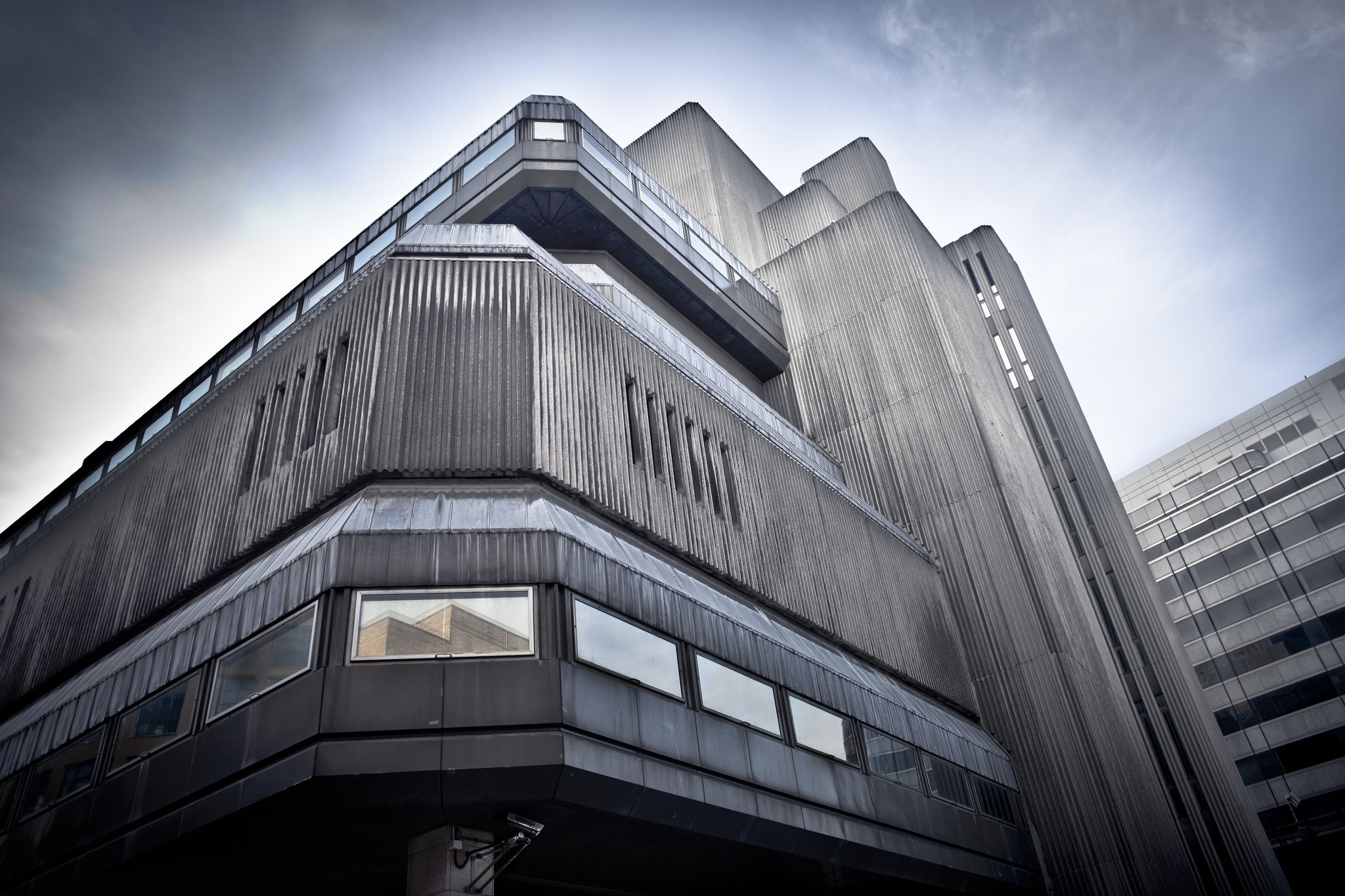
A dominating tower has been sliced through from top to bottom to release a beam of warm light to the exterior. The cleft exaggerates the linear nature of the architecture and creates a magnetizing draw to the facade. A massive concrete volume weighs heavy on the upper floor of this brutalist home design, with one corner perfectly propped on natural rock. Exterior up lighters have been positioned around its base to exaggerate its effect. "Funny enough, it has nothing to do with the criticism of the style as being "brutal," Rogers says, adding that brutalism derives from the French phrase béton brut, which translates as "raw concrete."
Taichung City, Taiwan
McGregor Smith recalled that his work on the book began when he visited the brutalist Wotruba Church in Vienna, which sparked his interest in modernist church architecture. "Many are surprised to discover the thought-provoking nature of brutalist architecture and are drawn to its challenging and unconventional qualities," McGregor Smith told Dezeen. It was designed to mirror the home Mendes da Rocha had built for his sibling, which features bulky, exposed concrete volumes. Brutalism is an architectural style that spawned from the modernist architectural movement and which flourished from the 1950s to the 1970s. The following list provides numerous examples of this architectural style worldwide.
Get the best in architecture and design
London's Trellick Tower, designed by architect Erno Goldfinger, is a 31-story Brutalist housing unit completed in 1972 that now has landmark status. Other significant Brutalist buildings in London include the Hayward Gallery in 1968 and the National Theatre (1976) in London's South Bank. Situated on the site of the ruins of the castle of Königsberg (capital of Prussia), construction began in 1970 on a 28-storey multifunctional building but due to the conditions of the marshy terrain, structural problems forced the construction of only 21 floors. In 1985 work was financed to complete the building in its raw state and in 2005 restoration and finishing work was carried out, although the interior has remained unused. As Ernest Nathan Rogers said, "the corpses of architecture remain unburied". This breathtaking architectural concept house on a rock face is the stuff brutalist architects’ dreams are built of.

San Gimignano’s Skyscrapers from Medieval Times
Unexpectedly, the images suspended in silky and translucent materials to evoke the sun’s universal appeal as well as tease us to read these images in unexpected ways. Within the historic walls of Teatro Gerolamo, design studio Formafantasma challenged us to look beyond mere aesthetics in design by turning the gaze to ethical modes of production. The installation Earthic, for manufacturer of sustainable interior surface Cosentino, turned waste into luxury by utilizing debris from the company’s production processes and cooking oil in the resin, while the white fragments on the surfaces, the aesthetic parts, were composed of recycled glass and PET.
This stunning church designed by Fritz G. Mayr was built in 1976 and is one of the most popular Brutalist buildings. Wotruba Church showcases blocks of a variety of sizes but still details the concrete predominately used in this style. With the variance in shape sizes, this building adds an element of artistic value for an interesting visual.
Related articles
The geometric design, which was created by Brazilian firm Reinach Mendonça Architects Associados, compliments the slanted roof topped with grass and concrete pillars elsewhere in the building. "Being an expansion of the house, we wanted to have this kind of same palette of materials which is stone and concrete, yet within that palette we have a lot of different treatments that allow different textures and surfaces," he explained. Here, modernist Brazilian architects Paulo Mendes da Rocha, Lina Bo Bardi and Argentinian studio Luciano Kruk embraced the style. News from Dezeen Events Guide, a listings guide covering the leading design-related events taking place around the world.
Why Is It Called Brutalism?

Fundamental design principles include exposing elemental building materials, expressing architectural function through exterior forms, and creating monumental, imposing shapes. These principles synthesize modernist ethics with historical and cultural contexts. Brutalism originated as a mid-century style, and architects today are incorporating its ideas in new ways. Exposed concrete interiors, prefabricated modules, and parametric modeling enable modern adaptations. Technologies like digital fabrication permit more complex, brutalist-inspired shapes.
In the United Kingdom, as the university sector expanded and new institutions opened - the so-called "plate-glass universities" of the 1960s - striking Brutalist buildings were commissioned across the UK, notably at the Universities of Essex, East Anglia, and Glasgow. Brutalist style was also employed at various Canadian universities, notably for the Andrew Building (1964) at the University of Toronto. With the publication of his essay "The New Brutalism" (1955), the architectural critic and historian Reyner Banham became the leading theorist and advocate of the Brutalist movement.
Architects chose to leave the concrete unfinished, with patterns from the wooden forms and rough surfaces exposed. The brutalist style embraced concrete for its plasticity and ability to be cast and shaped creatively. Concrete’s rough textures and monolithic forms aligned with the style’s bold, imposing aesthetic.
"Stripped of their symbology and place in time, they are spaces to forget the horrors of history, war and shame and focus on the hope and light of the future." "The form nods to the sanctuary cave and the symbolism of new life represented by the egg. The unreachable windows and walkways invite visitors' eyes to explore and contemplate mysteries." "They eschewed nostalgic replication, resulting in spaces that excluded functional areas and symbols prevalent since medieval times, retaining only the essential elements of the altar, cross, and font." $1.084m via Chile Sotheby’s International RealtyBrutalism embraces its softer side at this rural home, located on the outskirts of Chile’s Colina. Inside, rooms soar 3.5-metres high, framed by sliding glass panes that offer views over the nearby Santa Isabel hill. Concrete floors and columns contrast bamboo and lenga, as well as the landscaped gardens outside.
Elsewhere, Dutch solar designer Marjan van Aubel proposed a future where solar energy is holistically embedded in the design process, rather than an afterthought add-on. Working with Lexus, her 8 Minutes and 20 Seconds installation took a life-size model of LF-ZC electric concept car, sliced into 11 transparent sheets, while energy was sourced from solar power captured by organic photovoltaic cells and stored in built-in batteries. The car’s color changed as the sun charged the battery, all to the natural sounds of rustling bamboo and the sun, based on sounds collected by Nasa. Elsewhere designers continued delving into the potentials of artificial intelligence in design and production. Philippe Starck, for instance, showed furniture made in partnership with AI. Working with the Italian furniture maker Kartell, his A.I Lounge and A.I Console use recycled plastic for an interesting dialogue on materials and production.
The best brutalist homes on the market right now - The Spaces
The best brutalist homes on the market right now.
Posted: Mon, 07 Oct 2019 19:50:46 GMT [source]
Round windows gather around the top of this leggy structure like a cubist meets the Brutalist interpretation of a spider’s head. Massive perforations bore through dense concrete walls to lighten their look and let natural sunlight enter the volumes behind. In this design, a similar texture trend is translated to the exterior using Dhrangadhra sandstone.
For this project, BAK Arquitectos added a robust concrete facade on the front of the two houses to give residents protection from traffic noise from the street below. Its angular shape, narrow windows and solid concrete walls protect holidaymakers when inside while from the outside, the stark cube looks impenetrable. Sent every Tuesday and containing a selection of the most important news highlights. Emily Estep is a plant biologist and journalist who has worked for a variety of online news and media outlets, writing about and editing topics including environmental science and houseplants. We try to feed your imagination by picking up and delivering a daily dose of the most exciting and outstanding selection of design & architecture ideas. When your concrete house looks like a futuristic car with four hexagonal ‘wheels,’ you know you’ve hit top fan status.
Half of the structure's concrete was precast in steel molds and used darker cement, while the rest was cast in wooden frames onsite. Both were left unfinished so that contrasts in color and texture are created, as the second-floor pylons are darker and rougher in appearance, rising to the third floor's lighter and smoothly repetitive forms. The sense of tonal shift created as the building ascends contrasts with the inverted pyramid shape that draws attention downward through the vertical lines of the pylons and window frames to the ground floor, as if emphasizing the building's public function. The building's architects were influenced by Le Corbusier, as well as by Italian Renaissance town halls, and the nearby granite structure of Alexander Parris's Quincy Market (1825). Kallman was a professor at Columbia University, while McKinnell was a graduate student at the university, when their design won the 1962 competition for the project to build an accessible city government building, featuring the most heavily-used departments on the ground floor.
Architects can create patterned, precast concrete panels or build striking in situ facades. Thirdly, brutalism’s modular construction translates well to prefabrication. Repetitive concrete units can be standardized for efficiency while allowing customization through varied arrangements and finishes. Concrete absorbs heat, and strategic shading, window placement, vegetation layers, and water features like reflecting pools and fountains can offset this.
From the beginning, the building was controversial, with calls for its demolition beginning while it was still under construction. In the decades since its construction it has often been named in public surveys as one of 'the world's ugliest buildings.' By contrast, polls conducted with architects have consistently found it to be considered one of the top ten architectural designs in the United States. This split of opinion is typical of the passionate and divergent views that Brutalist architecture can arouse. Known locally as the "glasshouse," the design of the Smithsons' Hunstanton Secondary Modern School emphasizes its long, rectangular, glass-glazed central structure, whose steel framework is visible even from a distance. Such features led architectural critics to use the term "New Brutalism" for the first time in describing the building. The rectangular structure includes two stories, with classrooms located on the first floor, and the interior design makes innovative use of staircase columns to access no more than three classrooms, minimizing the noise and disruption of student movement.




No comments:
Post a Comment